FlowBank

1191 days ago

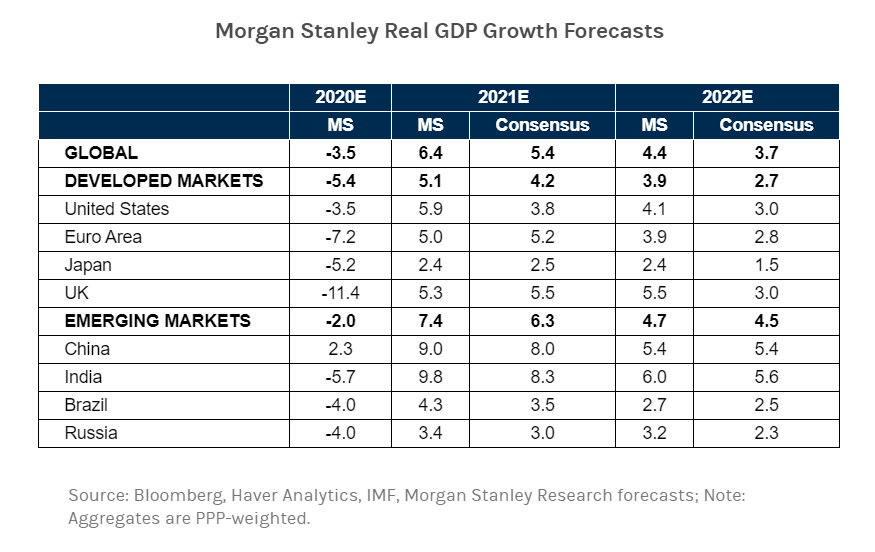
Chart of the Day: Morgan Stanley's Real GDP Growth Forecast

Globally, the world saw a 3.5% decline in 2020. The consensus for 2021 is of +5.4% while MS estimates a +6.4%, while the consensus for 2022 is of +3.7% while MS is again more confident with a +4.4%. In all cases, Emerging Markets seem to be leading the way, with China and India showing expected growth between +8% and +10%.
#Macro
GDP growth estimates for 2021 and 2022

1191 days ago

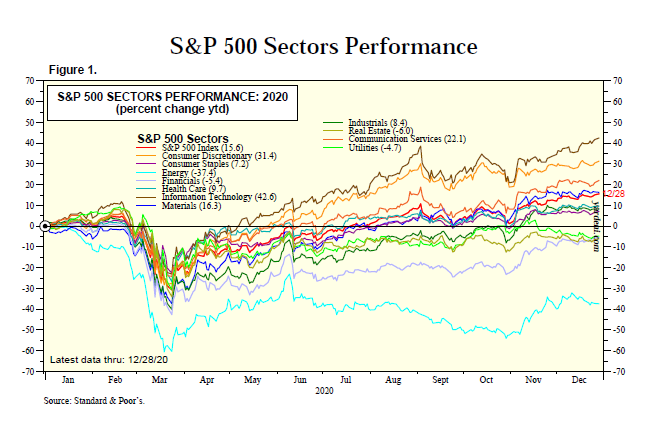
S&P 500 performance, by sector: Tech is ahead

As you all know, 2020 was quite an uneven year for the economy, and we can clearly witness it looking at the S&P 500 performance by sector. Information Technology (+42.6%) is far ahead, while the last in the race remains Energy (-37.4%). Both are quite extreme values compared with the average of the index (+15.6%). Communication Services have also fared well (+22.1%), and no other industry had a loss of over 10%, the worst after Energy being Real Estate (-6%).

#Macro
S&P 500 index performance by sector

1192 days ago

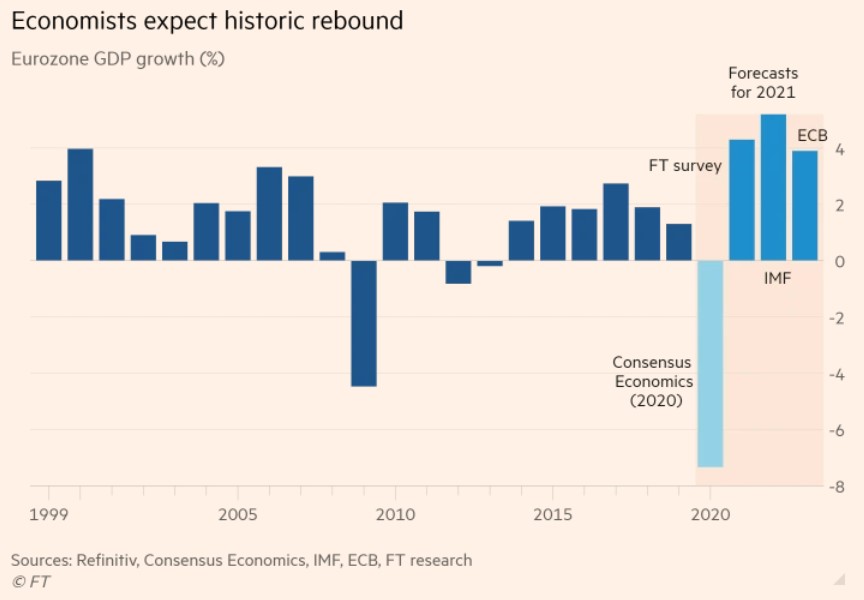
Economic boom around the corner ?

Eurozone GDP could grow 4.3% according to a survey of economists, the ECB estimates 3.9% and the IMF suggests 5.2%. Consumers should have enough liquidity to satisfy a pent up demand across all sectors boosting prospects for 2021. Source: FT

#Macro

1193 days ago

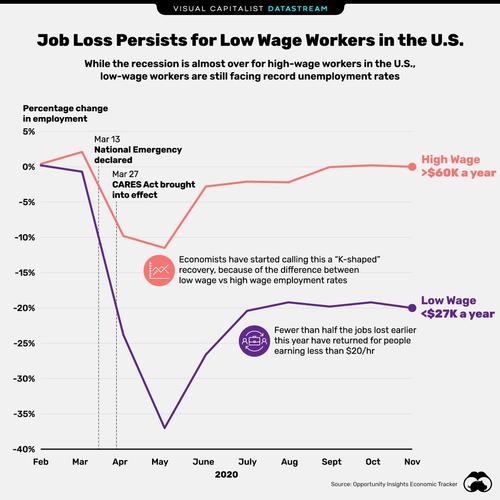
Visualising America's K-shaped recovery

A very different story for low income vs high income earners since March

#Macro
Visualising America's K-shaped recovery

1197 days ago

Capital Markets Outlook

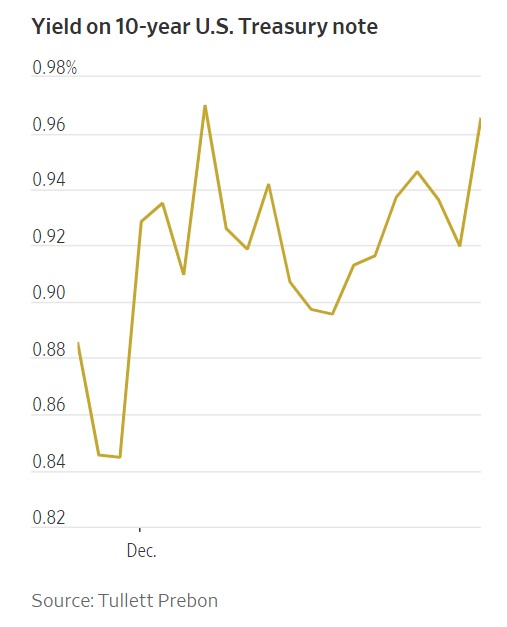
''More directly impacted by the trade news, yields on European government bonds also climbed, with the 10-year German bond yield rising to minus 0.541% from minus 0.589% and the 10-year U.K. yield jumping to 0.285% from 0.186%. In volatile trading, the British pound was recently up around 1.2% against the dollar at $1.3521. Investors tend to sell government bonds when they are feeling better about the economic outlook, partly because faster growth can lead to a higher rate of inflation and less accommodative monetary policy from central banks. A stronger economy also encourages risk-taking, reducing the need to hold ultrasafe but low-yielding government debt.'' says Sam Goldfarb at WSJ

#Macro
BONDS YIELDS NORTHBOUND
bg_newsletter